
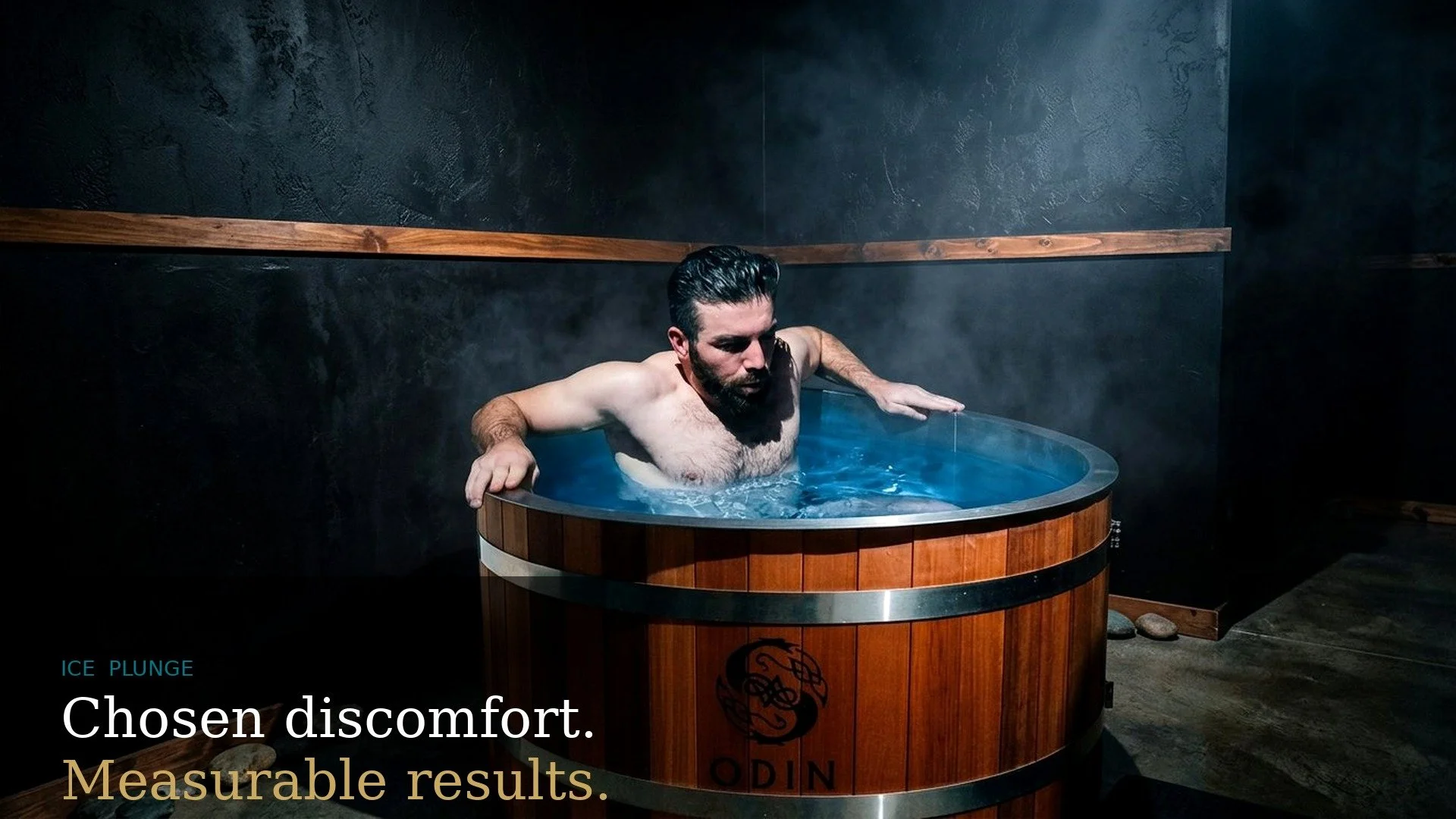
Ice Plunge
Chosen discomfort.
Real results.
Cold water immersion is one of the most studied recovery and resilience practices there is. The research is solid and the mechanism is well understood. What actually makes the difference is how you do it.
Every ice plunge here is guided, private and set up around you. We dial the temperature to your experience and what you're working toward, and we coach your breathing through the cold shock so you can settle into it rather than fight it. Most people leave clearer and lighter than when they walked in.
Standard
5 minutes
Extended
10 minutes
Temperature
Tailored to you
Guided
Every plunge, always
Breath coaching
Included every session
Privacy
Private room
with ensuite shower
Your session
What to expect
Arrival
We'll set your plunge temperature based on your experience and what you're working toward. If you like having the data, we can optionally take a quick HRV reading so you can see your own numbers before and after, but it's entirely optional and never the point of the session.
Breath preparation
Before you get in, we coach you through your breathing. The cold shock response is run by the nervous system, and the breath is your best tool for managing it. Controlled nasal breathing before and during the plunge takes a lot of the edge off and lets you settle into the cold rather than fight it. It's one of the most useful things we teach, and most places skip it entirely.
Guided immersion
Every plunge is guided. We're with you through the first hit of cold, the settling, and the rest of the session. First-timers start at a gentler temperature and work down over future sessions as the body adapts. The progressive approach is deliberate, since adapting to cold is a process, not a one-off.
Natural rewarming
Afterwards you rewarm naturally rather than diving straight into a hot shower, which lets the body finish generating its own heat from the inside. A lot of people find this the most pleasant part. A fluffy towel, body wash and private shower are all there once you've rewarmed.
Afterwards
Most people leave mentally clear, physically energised and genuinely a bit buzzy. If you took the optional HRV reading, you can see how far things shifted across the session. Either way, the feeling tends to speak for itself.
Why people plunge
What people come for
That sharp lift in mood and energy
Recovery after training
Mental clarity and focus
Building stress resilience
A genuine mental challenge
Feeling switched-on for the day
Research-backed
The science
Cold water produces one of the most reliable neurochemical responses you can measure in the body. Studies have reported large increases in norepinephrine, a neurotransmitter tied to attention, focus, mood and energy, following cold immersion. That's widely thought to be behind the clear-headed, lifted feeling people describe afterwards. The effect builds with repeated exposure as the body adapts, and it's a genuine physiological response to the cold, not just the satisfaction of having done something hard.
Cold exposure activates brown adipose tissue, a metabolically active fat that generates heat by burning energy rather than storing it. Research has explored how regular cold exposure recruits and activates this tissue, and how cold influences mitochondrial pathways in cells. This is the area people are pointing to when they talk about the metabolic side of cold, and it's an active and genuinely interesting field of study rather than a settled promise.
Cold causes blood vessels to constrict, which is part of why it's long been used for recovery, and it dampens how strongly you feel discomfort in the moment. Researchers have studied cold immersion's effects on inflammatory and stress markers, and a 2025 systematic review reported reductions in some of these following cold water immersion. We're describing what the research has looked at, not claiming cold treats any condition. If you're managing a health issue, that's a conversation for your doctor.
The cold shock response is that involuntary gasp and rapid breathing when you first hit cold water, set off by cold receptors in the skin. Left unmanaged it spikes your heart rate and makes the cold feel far harder than it needs to. Controlled nasal breathing before and during immersion helps bring the parasympathetic nervous system into play, taking the edge off that response so you can settle into the temperature. It's exactly why we coach the breath on every plunge. It genuinely changes how the cold feels, and it's not a wellness add-on.
Choosing to step into cold water, manage the discomfort and stay present through it is a form of stress training. The body runs a similar physiological response to cold stress as it does to other kinds of stress, so practising moving calmly through activation and back into recovery in the plunge is good practice for handling stress more broadly. A lot of people describe feeling more resilient and steadier over time. It's a growing area of research, and we'd frame it as something that supports how you handle stress, not a treatment for any condition.
Full research references on the Ice Plunge science page →
Go further
Make it a protocol
The plunge is great on its own, and even better paired with heat or sequenced into a longer recovery visit. That hot-then-cold cycle is what our contrast protocols are built on.
Forge
Our contrast protocol: 30 minutes of sauna into a guided plunge. Heat first primes the body, then the cold does its work. The classic cycle, guided start to finish.
View Forge →Reset Journey
Our flagship. A full contrast cycle then an hour in the float. Stress, then deep recovery, in a single visit.
View the Reset Journey →The Ritual
When you want pure recovery rather than the cold: an hour in the float followed by an hour of massage.
View The Ritual →Mind Over Matter Practice is a science-led recovery and wellness studio. We don't diagnose, treat, or replace medical care. If you have a heart condition, are pregnant, or have any concern, please consult your doctor before booking.